
I am writing to share with you my love of history as it unfolded in the daily lives of men and women in England during the early 1800’s. I hope you will enjoy receiving my newsletters with snippets of information about life in the Regency period and announcements of my stories as they make their appearance on Amazon.
My first novella, Grandon Hall: August 2016.
Miss Louisa Mayville attends a country house party at Grandon Hall in an attempt to solve a family crisis. She has to fend off her mother’s matchmaking efforts to marry her to the Earl of Lichfield and at the same time she tries to prevent a duel. A piece of the puzzle keeps eluding her and our hero, Lord Beaumont, refuses to divulge any information. In the end Louisa’s maid provides invaluable insight.
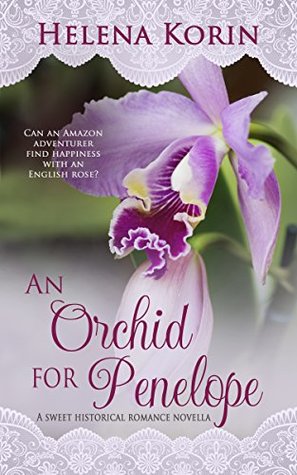 My second novella, An Orchid for Penelope: February 2017.
My second novella is set in 1818. Jonathan Greenley, Esquire, a gentleman botanist has brought back orchid cuttings from the Amazon and hopes to be the first to culture an orchid in England. Fortunately for him, his Aunt Felicity has had a conservatory built on her estate. Penelope, our heroine, makes matters worse when she tries to be helpful. One crisis follows another until Jonathan makes a surprising discovery and Penelope manages to dig up a long buried family secret.
***
At this time wealthy gentry, in large numbers, were building conservatories, or glass houses on their country estates. Everyone wanted to grow exotic tropical plants. But most plants which were imported died shortly after reaching England. The steam heat used to warm the conservatories was not enough. The plants also needed enough air and light. Gradually information about the conditions wherein orchids thrived became available from the plant collectors themselves. Glass making improved and new styles of building conservatories which incorporated slanted roofs to catch the sunlight helped also. In 1818 the Cattleya labiata was the first orchid to bloom from a cutting brought back from Brazil.
 Letters were a Regency lady’s constant companion. They were her means of communicating with her world. Without telephones, email, texting, Twitter or Facebook, she had to write a goodly number every day. We take our modern communication methods for granted but we should be grateful for them. In the Regency you would receive a dinner invitation, and be expected to reply to it in a timely fashion. The latest on-dits (gossip) with your closest friends also came sealed in an envelope. If a letter arrived smelling of rose geraniums you could be sure that Grandmamma was anxious to make herself perfectly clear on something very close to her heart. Friends were even known to have bitter fights via the post.
 helenakorin.com